Skip to content

Southeast Asia Supply Chain

ASEAN’s Supply Chain Rebalancing Role (2026)

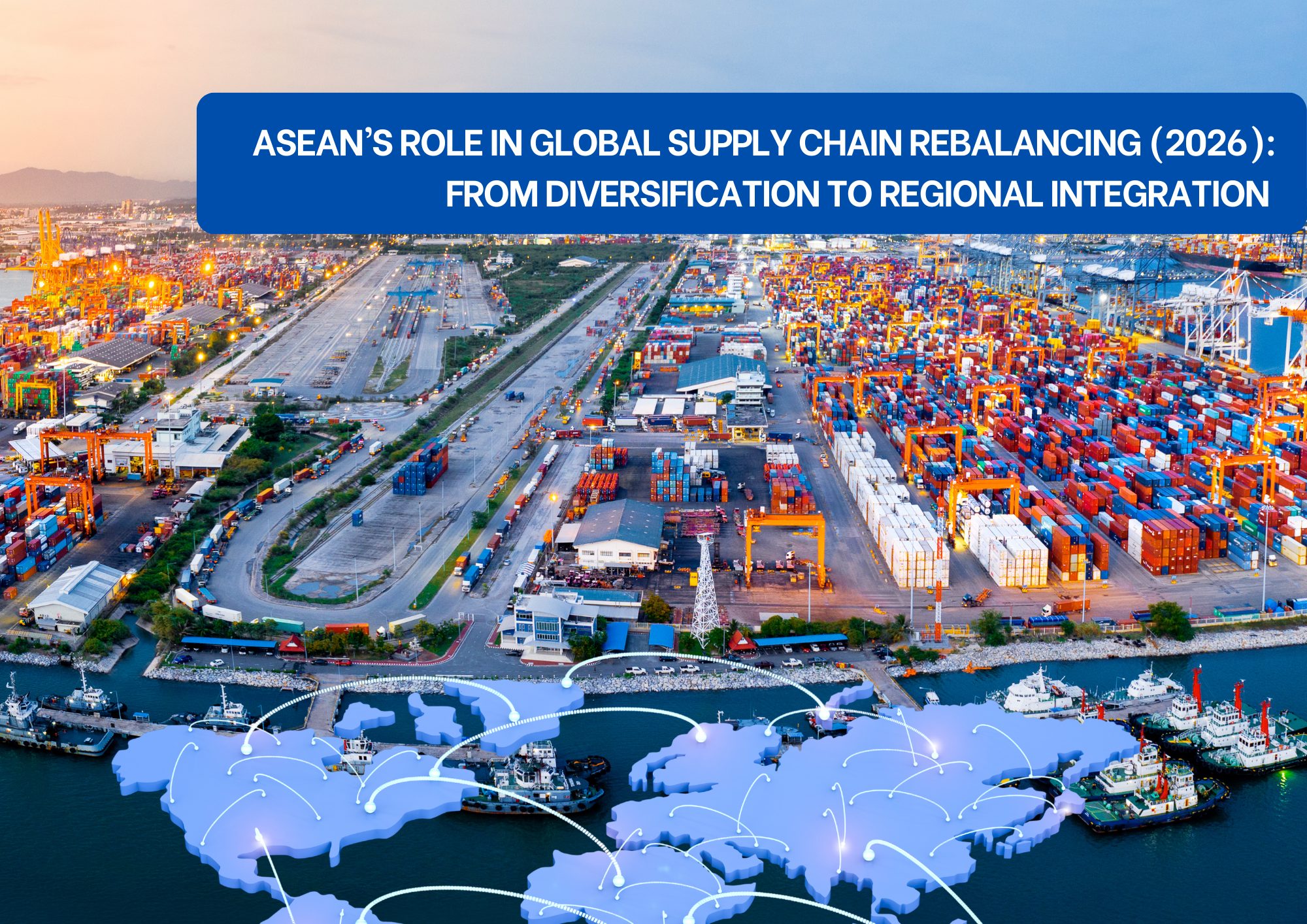
According to www.sourceofasia.com, ASEAN has shifted from a secondary sourcing option to a strategic manufacturing hub central to global supply chain rebalancing. The region anchors the China Plus One strategy, with Vietnam expanding in electronics, Thailand leading automotive production, and Indonesia advancing in battery materials and EV supply chains. Rebalancing — distinct from decoupling — involves redistributing production volume across countries to reduce concentration risk, not abandoning China. Success requires disciplined execution: supplier validation, compliance oversight, and alignment with long-term strategy. Infrastructure gaps and talent shortages remain challenges despite progress in semiconductor packaging, precision components, and industrial park development.

Original source: sourceofasia.com

ASEAN’s Supply Chain Rebalancing Role (2026)

According to www.sourceofasia.com, ASEAN has evolved from a secondary sourcing option into a strategic manufacturing hub central to global supply chain rebalancing — particularly within US–ASEAN industrial realignment.

What Supply Chain Rebalancing Really Means

Supply chain rebalancing is a structural shift: it spreads production, sourcing, and logistics across multiple countries to reduce concentration risk and improve long-term flexibility. It is not full relocation or decoupling. Rather, it means reducing heavy dependence on a single location while maintaining operational continuity elsewhere. Unlike diversification — which adds backup suppliers — rebalancing changes how much production each country carries.

Why Rebalancing Accelerated After 2018

According to the International Monetary Fund, US–China trade tensions prompted immediate effects, with rising import duties forcing companies dependent on Chinese production to reevaluate their risks. This was compounded by pandemic disruptions that halted operations — factories paused, ports slowed, and deliveries became uncertain — highlighting that efficiency alone wasn’t sufficient without flexibility. As a response, the China Plus One strategy gained traction, with firms adding production sites in Southeast Asia to reduce risk and manage tariff pressure — not abandoning China entirely.

How Rebalancing Differs from Decoupling

  • Rebalancing is about spreading risk: adjusting where companies produce and source to avoid overdependence on one country.
  • Decoupling implies a clear break — separating supply chains for political or strategic reasons.
  • In practice, most multinational firms are not leaving China entirely; they are reducing exposure, not cutting ties.
  • ASEAN functions as a complement rather than a replacement: components may still move between China and Southeast Asia before final assembly.

ASEAN’s Strategic Position

As reported by CNBC, Southeast Asia has become a top choice for companies diversifying supply chains away from China under the China Plus One strategy. Several countries play distinct roles:

  • Vietnam: expanded into electronics assembly and consumer goods.
  • Thailand: continues to anchor regional automotive production.
  • Indonesia: moving into battery materials and EV-related industries.

ASEAN is no longer seen as a low-cost assembly base. Growth is visible in higher-value sectors such as Semiconductor packaging and testing, precision components, EV supply chains, and battery materials. Industrial parks support this upgrade with ready-built infrastructure, stable utilities, and cluster networks — backed by government incentives including tax breaks, land access, and investment programs.

Practical Implications for Supply Chain Professionals

Success depends on disciplined execution: supplier validation, compliance oversight, and alignment with long-term strategy. Regional integration and trade agreements make cross-border production more efficient, but infrastructure gaps and talent shortages still require attention. Companies must treat ASEAN not as a stopgap but as an integrated node — one enabling layered, flexible supply chains that balance cost, tariff exposure, and continuity.

Source: www.sourceofasia.com

Compiled from international media by the SCI.AI editorial team.
Ask SCI.AI Finished reading? Continue with SCI.AI. Explore the related policy, route, company and historical context. Continue asking
Indonesian Manufacturing Exports Rise 7.37% in H1 2026
Southeast Asia Supply Chain

Indonesian Manufacturing Exports Rise 7.37% in H1 2026

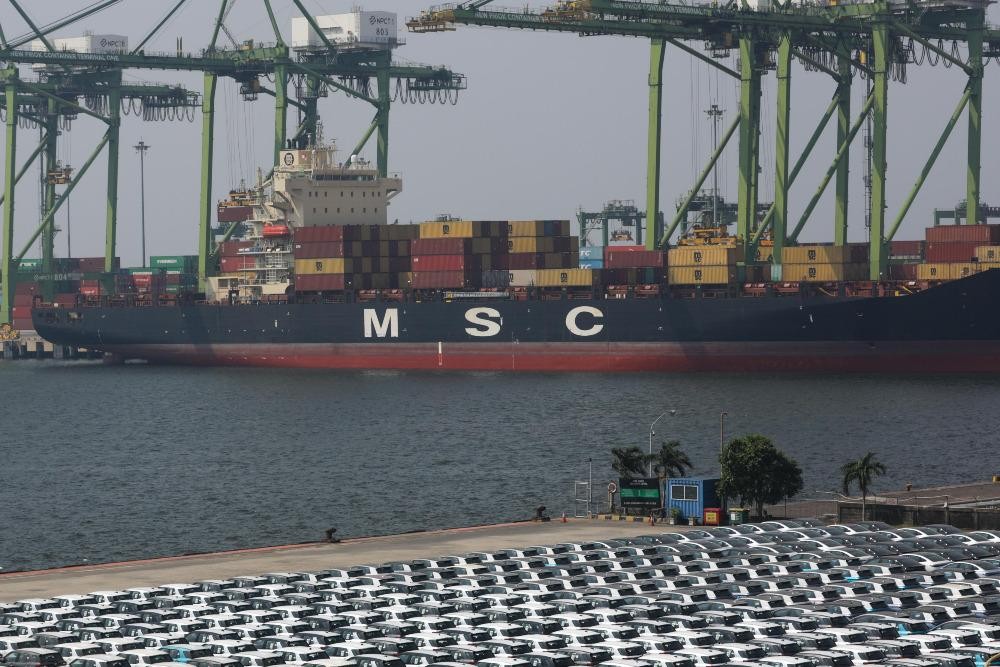
Indonesia’s manufacturing exports rose 7.37% in H1 2026, driving non-oil-and-gas export growth to US$134.58 billion — up 4.90% YoY. Processed nickel, CPO, and aluminum led gains. In June alone, manufacturing exports hit US$20.88 billion (85.6% of nonmigas total), buoyed by 69.30% YoY growth in nickel shipments. China remained the top destination (US$34.56 billion, +18.10%), followed by the US (US$15.82 billion) and India (US$9.25 billion), together capturing 44.31% of total nonmigas exports.

Vietnam Logistics Expo Draws 450 Firms Amid Đồng Nai Multimodal Push
Southeast Asia Supply Chain

Vietnam Logistics Expo Draws 450 Firms Amid Đồng Nai Multimodal Push

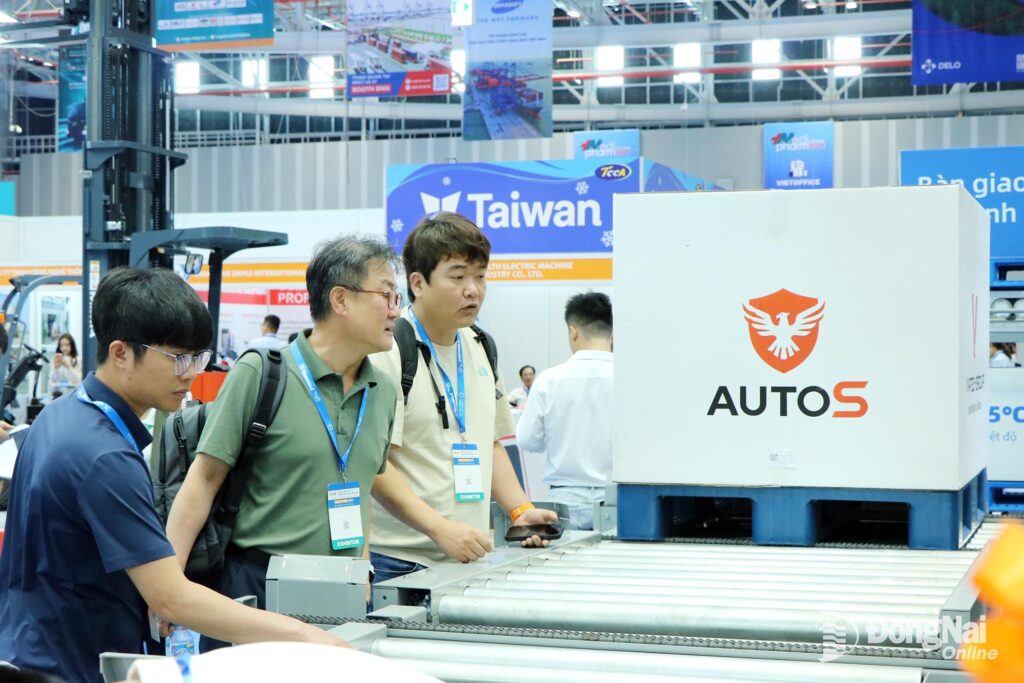
Vietnam's logistics sector is undergoing rapid digital and green transformation, highlighted by the 450-company Vietnam International Logistics Exhibition 2026 in Ho Chi Minh City. Policy leaders stress integration of digital tools, sustainability, and multimodal connectivity to cut costs and boost export competitiveness. Đồng Nai province leverages its industrial parks, Phước An Port, Long Thành Airport, and highway networks to build a logistics ecosystem — aiming to shift from manufacturing base to regional distribution and value-addition hub.

Vietnam Airlines launches first freighter in Q3 2026 amid 80% foreign cargo dominance
Southeast Asia Supply Chain

Vietnam Airlines launches first freighter in Q3 2026 amid 80% foreign cargo dominance

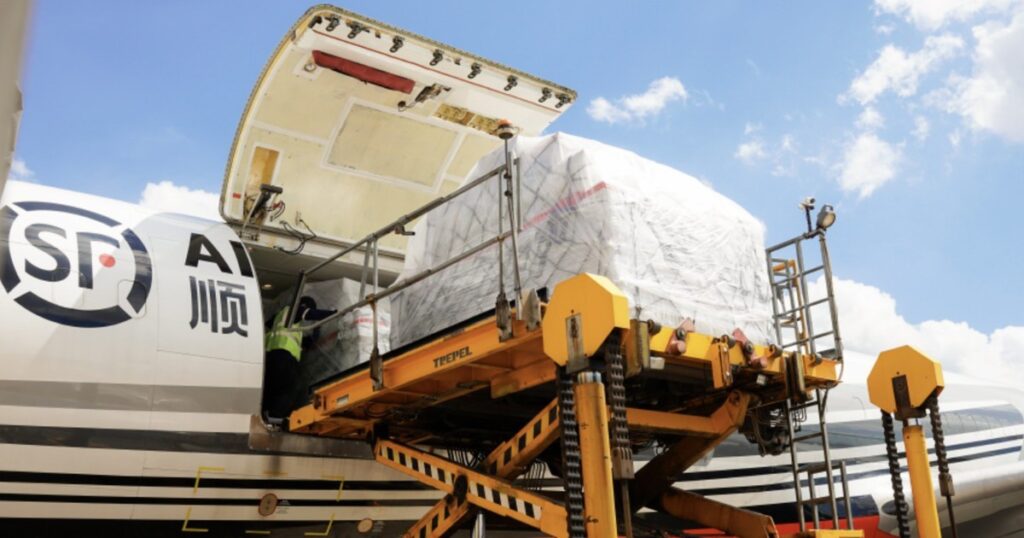
Vietnam Airlines will launch its first dedicated freighter in Q3 2026 amid record cargo volumes — 1.8 million tonnes in 2025, 920,900 tonnes in H1 2026 — yet foreign carriers still hold over 80% of international air cargo revenue. With Long Thanh Airport opening in December 2026 and ground-handling shifts underway (including Vietjet’s April 2025 move away from SAGS), Vietnam aims to capture more value across the air cargo chain. Korean Air projects 50,000 tonnes of cargo in Vietnam this year, up from 16,000 tonnes in 2024.

Welcome Back!

Login to your account below

Create New Account!

Fill the forms below to register

Retrieve your password

Please enter your username or email address to reset your password.

Scan to share via WeChat

Open WeChat and scan the QR code to share

QR Code

Add New Playlist