

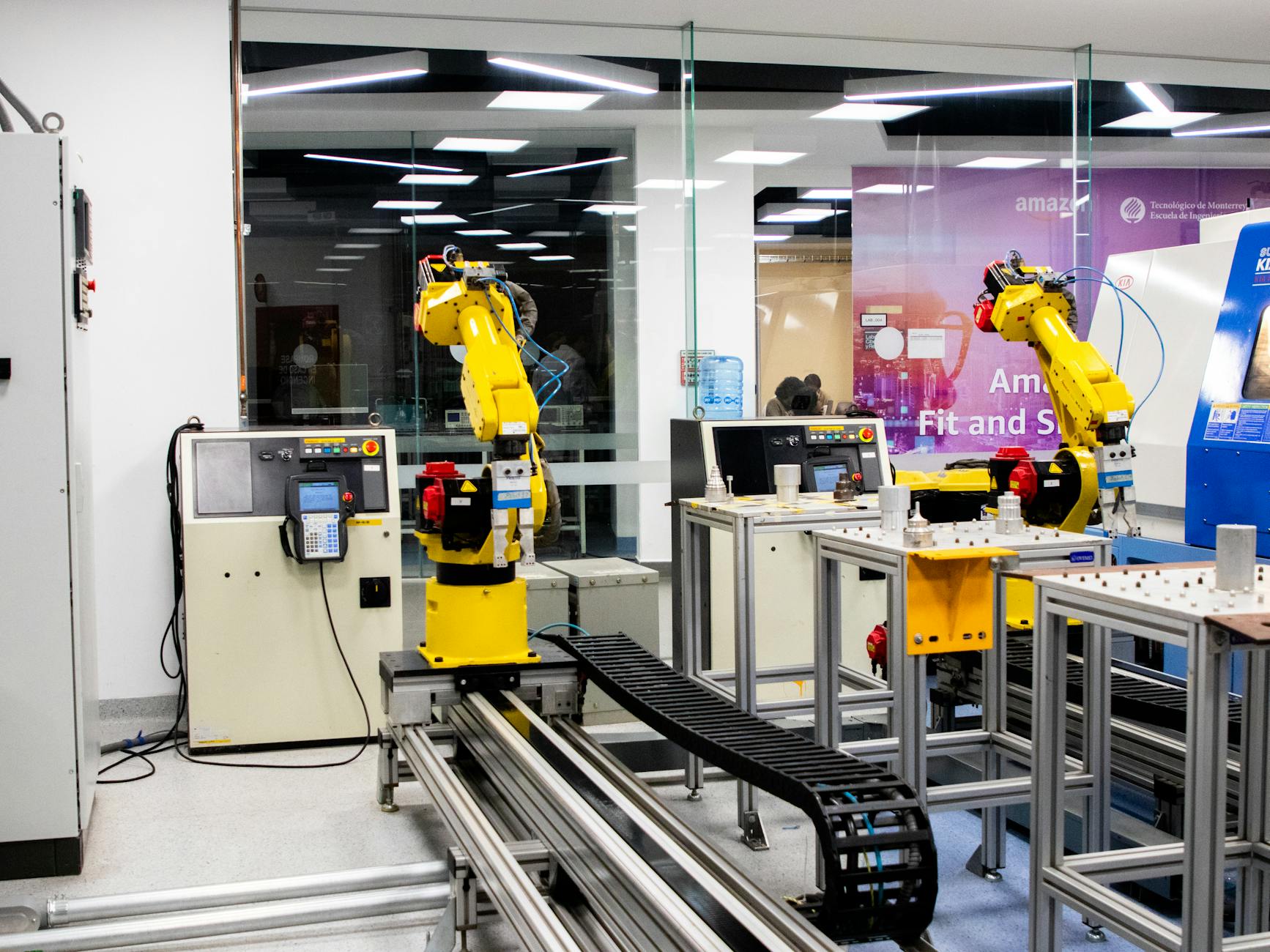
Warehouse robotics adoption surged to 48% across surveyed firms in 2025 — up from 23% in 2022 — with over half of respondents generating under $50M annually. As-a-service models drove accessibility: 64% used RaaS or SaaS in 2024, up from 46% two years prior. SMEs like Superior Communications (37 Brightpick robots) and UniUni (100+ warehouses, GRS partnership) cite flexible financing and peer validation as key decision factors. Experts caution against adoption without rigorous ROI assessment tied to specific operational bottlenecks.
According to www.supplychaindive.com, warehouse robotics adoption is expanding beyond mega-enterprises like Walmart and Amazon to small- and medium-sized enterprises (SMEs), driven by as-a-service models and peer validation.
Accelerated Adoption Across Company Sizes
A 2025 study conducted by MHI, Peerless Research Group, and The Robotics Group found that 48% of participating organizations were using robots in their plants and/or warehouses, up from 23% three years earlier. The survey included 216 respondents surveyed between January and February 2025 — with more than half representing companies with less than $50 million in annual revenue. This underscores a decisive shift toward democratized access to automation technology.
As-a-Service Models Lower Barriers
Subscription-based platforms — particularly robotics-as-a-service (RaaS) and software-as-a-service (SaaS) — are key enablers. In the 2024 version of the same MHI survey, 64% of responding companies reported using a RaaS or SaaS system, up from 46% two years prior. Jayesh Mehta, managing executive of industry groups at MHI, attributed this rise directly to the economic flexibility these models offer midsized operators.
- Superior Communications, a mobile accessories distributor, integrated 37 Brightpick autopicker robots into its Tennessee distribution center under a RaaS agreement — a factor explicitly cited by CEO Solomon Chen in the vendor selection process.
- Parcel carrier UniUni, operating over 100 warehouses across North America, began its robotics journey in 2023 via a partnership with UK-based Global Robotics Services (GRS). GRS’s RaaS model required lower upfront investment and offered flexible lease terms.
- UniUni first automated parcel sorting and sequencing — described by CEO Peter Lu as “two of the most labor-intensive and time-sensitive stages of warehouse operations” — before publicly announcing in April 2025 the deployment of two AI-powered sorting tools integrated with its existing warehouse execution system.
Peer Validation Over Vendor Claims
ROI uncertainty remains the top barrier to technology investment, per a Pennsylvania State University whitepaper commissioned by MHI and analyzing the 2024 study data. Sonya Snellenberger, VP of partnerships at Conexus Indiana, emphasized the outsized influence of peer success: “
‘I can hear all day from a tech integrator what they believe the ROI is,’ Snellenberger said. ‘But I want to hear from my peers.’
” She pointed to record-breaking attendance at MHI’s ProMat event in March 2025 — where robotics flooded the show floor — as tangible evidence of broad-based demand: “
‘That’s a huge indicator for there’s an appetite for this,’ Snellenberger said. ‘It’s not just all the big companies.’
”
Practical Caution for Practitioners
While momentum builds, Mehta urged supply chain professionals to assess fit rigorously: “
‘[Small- to medium-sized enterprises], or anyone for that matter, need to thoroughly investigate if they need to implement robotics and if this is helping them become more efficient, or is this just automating a task with little to no difference,’ Mehta said, warning firms to avoid a ‘keeping up with the Joneses’ mentality.
” This aligns with industry context: FedEx deployed Berkshire Grey’s autonomous trailer unloader in February 2026; Walmart announced robotics expansion in a Louisiana distribution center the same month. These moves reinforce that scalability, modularity, and integration readiness — not just headline specs — determine real-world impact for practitioners evaluating solutions.
Source: Supply Chain Dive
Compiled from international media by the SCI.AI editorial team.
Done reading? Ask SCI.AI your follow-up questions
Answers grounded in our tariff knowledge graph and in-house reporting. Guests: 3 questions/day — free accounts: 30/week.


