

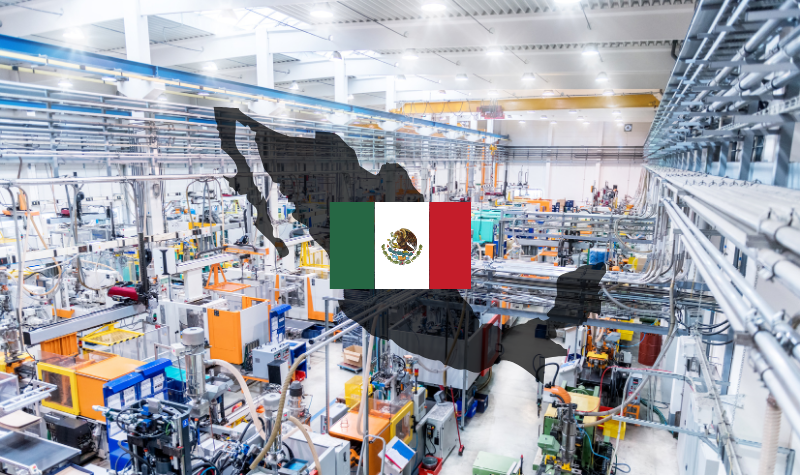
Mexico’s 2026 manufacturing landscape presents four pivotal considerations for global supply chain professionals: a 13% national minimum wage increase (to MXN $315.04/day), persistent peso–USD exchange rate volatility, the July 2026 USMCA six-year review—which may revise rules of origin and labor provisions—and modest but nearshoring-supported GDP growth. These dynamics require updated labor costing, active FX hedging, proactive supply chain qualification for USMCA compliance, and calibrated market-entry timing. While challenges exist, Mexico’s geographic advantage, skilled technical workforce, and integrated North American supply chains remain compelling.
According to mexcentrix.com, Mexico remains a top nearshoring destination for manufacturers in 2026—but rising labor costs, peso–USD volatility, and the first mandated USMCA review introduce critical operational and financial considerations.
Labor Costs: 13% Minimum Wage Increase Effective January 2026
Manufacturers must factor in a 13% increase in Mexico’s general minimum wage, effective 1 January 2026, raising it to approximately MXN $315.04 per day (roughly MXN $9,582 monthly). In the Border Free Zone (Zona Libre de la Frontera Norte), the increase was smaller—5%—lifting the daily minimum to about MXN $440.87, reflecting already elevated baseline wages. While Mexico still offers competitive labor costs versus the U.S. and Canada, the hike directly impacts labor-intensive operations. Companies are advised to recalculate total labor expenses—including compensation packages, workforce planning, and automation trade-offs—to maintain productivity and retention without eroding margins.
Exchange Rate Volatility: Peso–USD Swings Affect Input Costs and Margins
The Mexican peso (MXN) is expected to remain volatile against the U.S. dollar in 2026. Though the peso strengthened modestly at the start of the year, its trajectory remains uncertain. This volatility carries concrete implications:
- Input costs denominated in USD—such as imported machinery, equipment, or specialized components—may rise sharply if the peso weakens;
- Export profit margins to the U.S. and Canada may fluctuate significantly;
- Hedging strategies—including forward contracts, scenario-based financial modeling, and optimized pricing structures—are now essential tools for cost stabilization.
USMCA Review: July 2026 Deadline Adds Regulatory Uncertainty
The first six-year review of the United States–Mexico–Canada Agreement (USMCA) is scheduled for 1 July 2026. Under treaty provisions, this review could lead to revisions in rules of origin, labor standards, digital trade frameworks, and other regulatory pillars affecting cross-border manufacturing. While existing USMCA benefits—including tariff-free access—remain fully in force until any changes are formally agreed upon, companies face near-term compliance uncertainty. Notably, proposed updates may tighten regional content requirements, especially for automotive and auto parts supply chains. Manufacturers are urged to audit current sourcing networks now to ensure continued qualification under potential new thresholds.
Market Context: Modest Growth Amid Nearshoring Momentum
Economic forecasts suggest Mexico’s overall growth in 2026 will be modest, partly due to lingering trade uncertainty—but not stagnant. Analysts project a slight rebound from slower 2025 performance, supported by sustained manufacturing demand and strong nearshoring interest. This environment calls for careful timing of market entry and scaling decisions, aligned with both local demand signals and broader macroeconomic indicators.
Strategic Takeaways for Supply Chain Professionals
For global supply chain professionals evaluating Mexico operations in 2026, four actions are non-negotiable:
- Update labor cost models to reflect the new 13% minimum wage hike (and 5% zone-specific increase);
- Institutionalize foreign exchange risk management—including hedging, multi-scenario budgeting, and dollar-exposure controls;
- Monitor the July 2026 USMCA review closely and conduct proactive rules-of-origin gap analyses across Tier 1–3 suppliers;
- Leverage Mexico’s entrenched production networks and geographic proximity to the U.S.—advantages that remain structurally intact despite short-term headwinds.
These factors do not diminish Mexico’s strategic value; rather, they elevate the importance of disciplined, data-informed execution. As noted by Mexcentrix:
“Having the right local partner can make all the difference.” — Mexcentrix, Shelter Services Provider
With deep expertise in legal and fiscal compliance, HR administration, site selection, and regulatory guidance, shelter service providers help international manufacturers reduce liability, accelerate time-to-market, and sustain compliance amid evolving conditions.
Source: mexcentrix.com
Compiled from international media by the SCI.AI editorial team.


